THE OYSTER FARMER
AN OPEN STUDIO PROJECT: FELICIA LLOYD
Project Summary
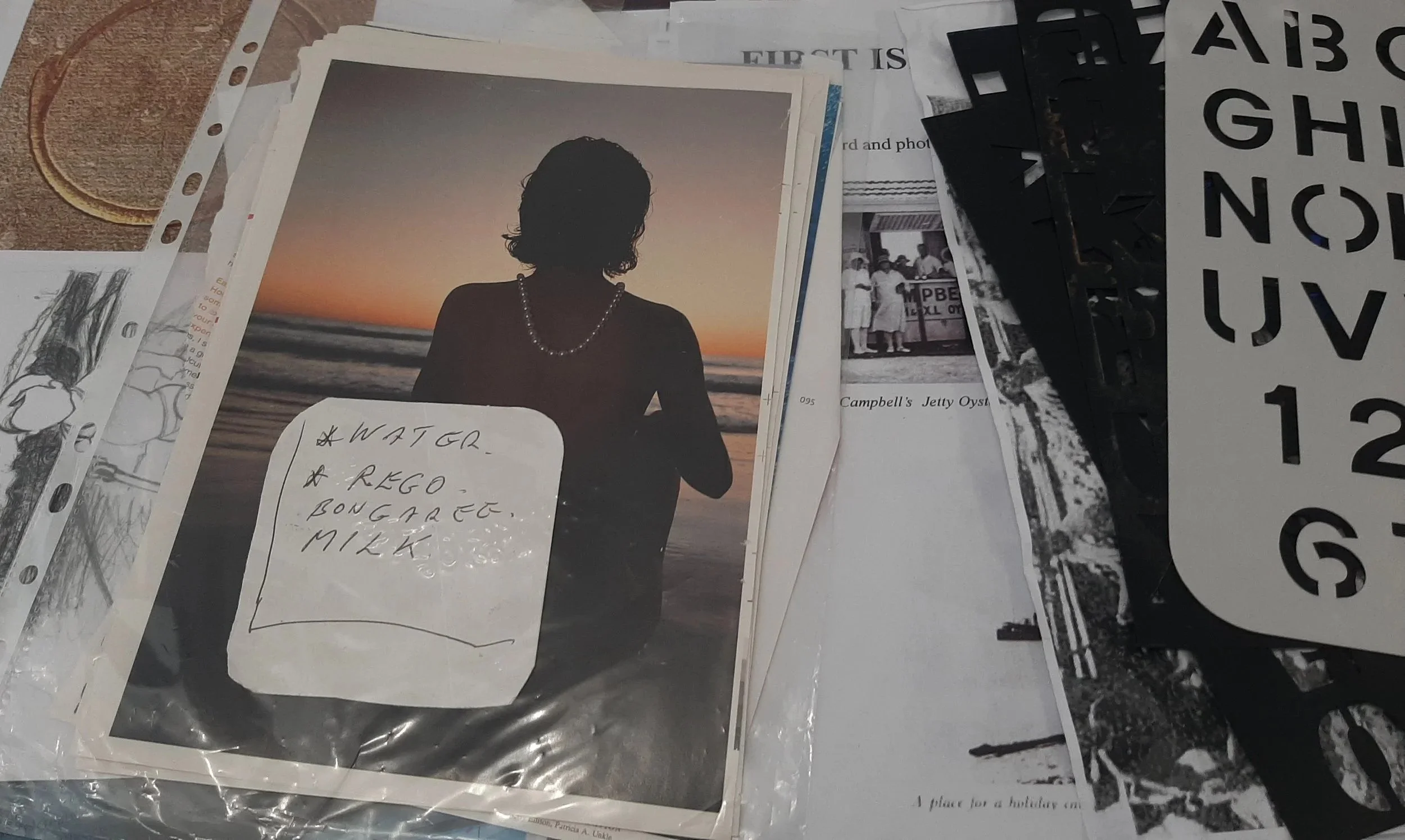
During February and March 2026, Artist Felicia Lloyd will be working openly within the gallery space, using this exhibition period as an active research phase. Visitors are invited to engage with the artist-researcher, view works-in-progress, and contribute their own stories, recollections, and knowledge of the Passage, Bribie Island, and oyster culture in the region.
This project is funded by the Regional Arts Development Fund - a partnership between the Queensland Government and City of Moreton Bay to support local arts and culture in regional Queensland.
This open, conversational approach reflects a belief that history is not fixed, and that understanding grows through exchange. The stories of oysters — ecological keystones, cultural anchors, and industrial commodities — are deeply entwined with the identity of Moreton Bay.
Placing this beside an exhibition of Uncle Ron Powell’s paintings - The Love of Bribie, the studio is both an exhibition and a listening space, where live research and community engagement focusing on the cultural, ecological, and historical significance of oyster farming in the region.
This period allows research of industry history, engagement with local restoration initiatives, and testing new processes in the studio. Outcomes will be a refined concept and experimental works-in-progress that form the groundwork for a future exhibition.
Oysters are deeply woven into the story of Moreton Bay. Once abundant and central to First Nations communities and colonial industry, their decline has had lasting ecological and cultural impacts. Today,restoration projects are bringing oysters back, symbolising resilience, community renewal, and ecological balance.
Open Studio Dates: 13 February – 9 March 2026: Open 10am – 2pm (Closed Tuesday and Thursday)
Events: Exhibition opening: Sun 22 February from 130-330pm - Artist talk: Sun 22 February from 200pm.


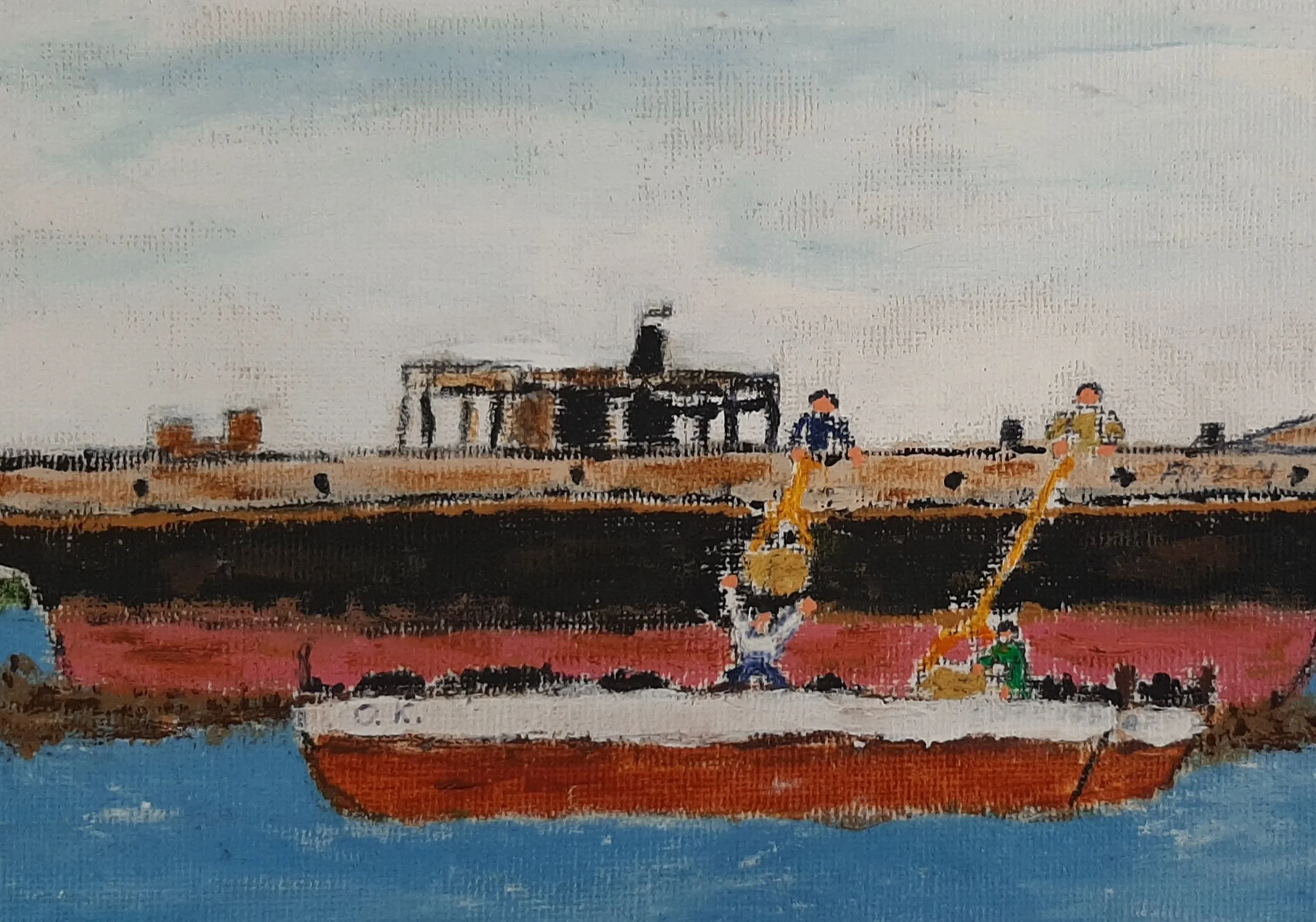
Combining the open studio research phase of The Oyster Farmer with Ron Powell’s exhibition The Love of Bribie significantly enriches both the depth of research and the development of new artworks. Ron Powell’s paintings and archival knowledge provide an immediate connection to lived local history, offering perspectives shaped by decades of observation and his research into the oyster industry for the Moreton Bay Oyster Company.
Presenting the projects together creates a layered research environment where artistic inquiry, historical material, and community memory intersect. Powell’s work functions as both a visual and contextual reference point, grounding the developing artwork within a deeper understanding of the cultural and ecological narratives of the Pumicestone Passage and wider Moreton Bay region.
The exhibition will attract visitors who hold personal connections to the local waterways. Their stories, recollections, and observations contribute valuable informal research that would not be accessible through archives alone. These conversations help expand the project’s understanding of how the oyster industry shaped local identity, livelihoods, and environmental change.
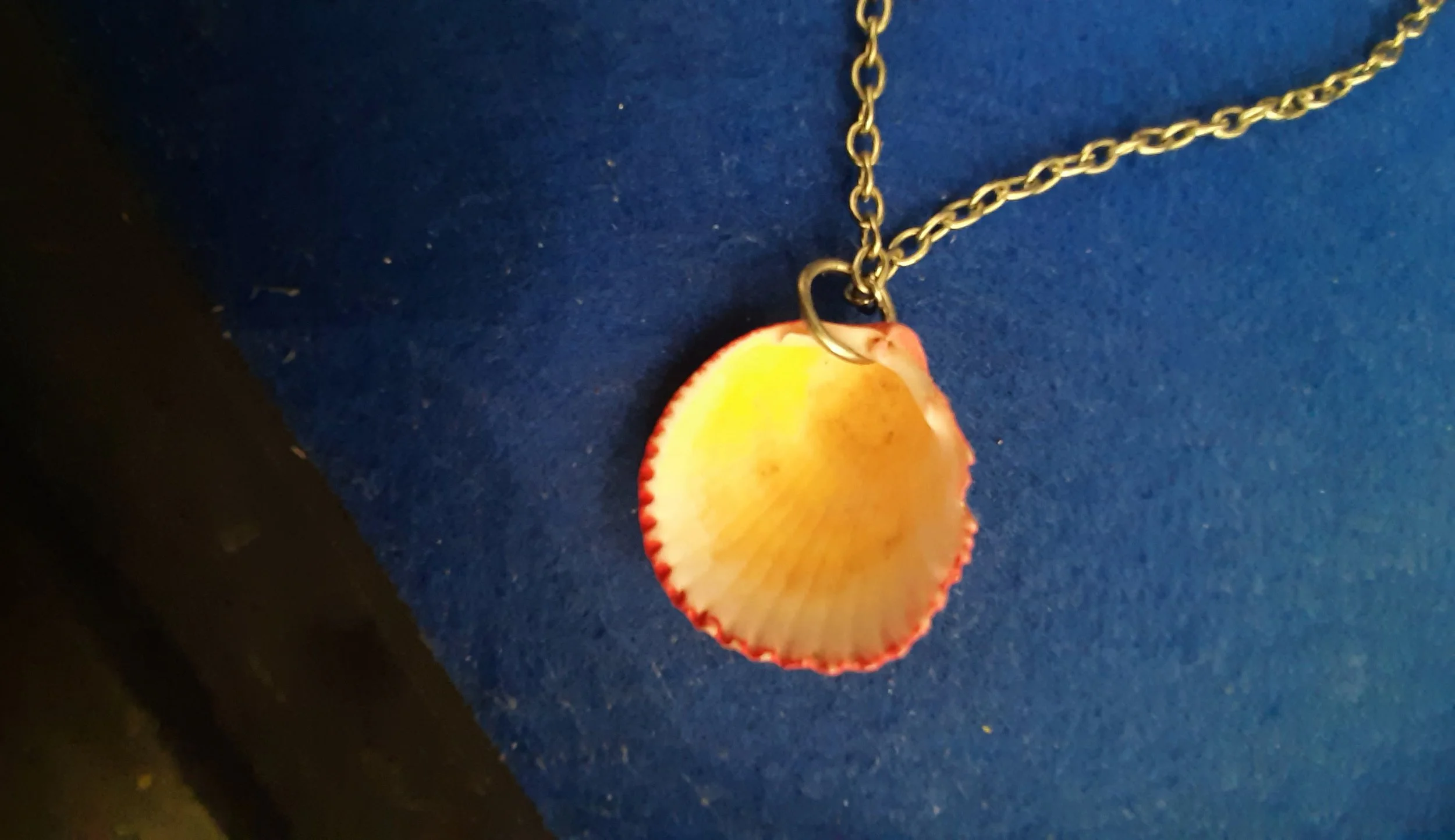
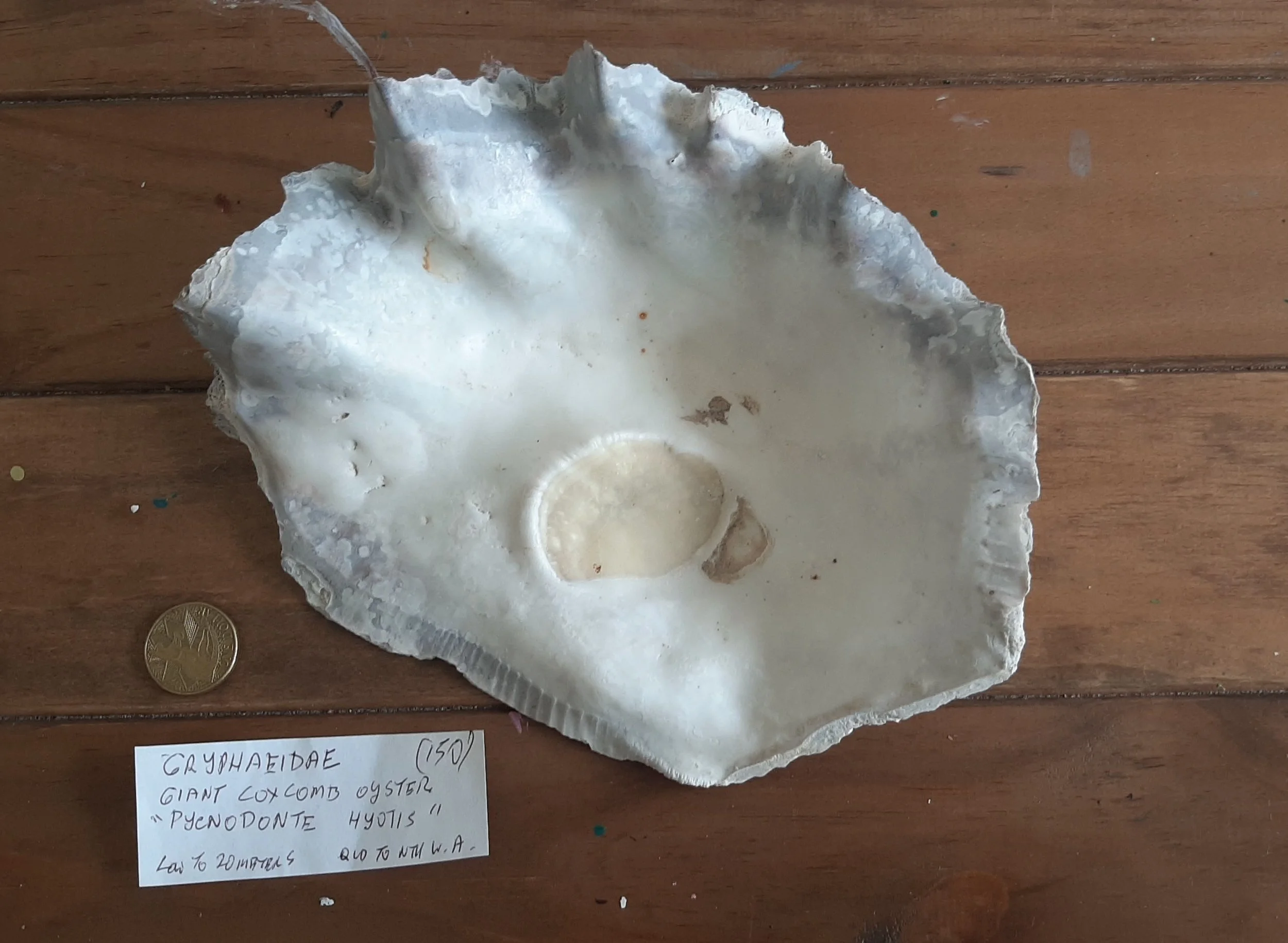
Working alongside Powell’s exhibition also reinforces the intergenerational exchange of knowledge. While Powell’s paintings reflect long-term reflection on place, the open studio process translates these histories into new material explorations through assemblage, text-based works, and experiments with oyster shells and coastal objects.
By situating the research phase within a live exhibition context, the project transforms the gallery into an active research space. This approach strengthens the conceptual framework of The Oyster Farmer, ensuring the emerging body of work remained grounded in community knowledge, local history, and the ecological realities of the region.